
Holowall Display Review for High-Impact Events

A step-and-repeat backdrop can fill a wall. A Holowall can stop a room. This Holowall display review looks at what makes a holographic LED wall compelling for events and campaigns, where it delivers its biggest payoff, and what needs to be planned before it becomes the visual centerpiece.
For event planners, brands, and hosts, the real question is not whether the technology looks futuristic. It does. The question is whether it creates a better guest experience, stronger content, and a more memorable brand moment than a conventional screen, printed display, or décor installation.
What Is a Holowall Display?
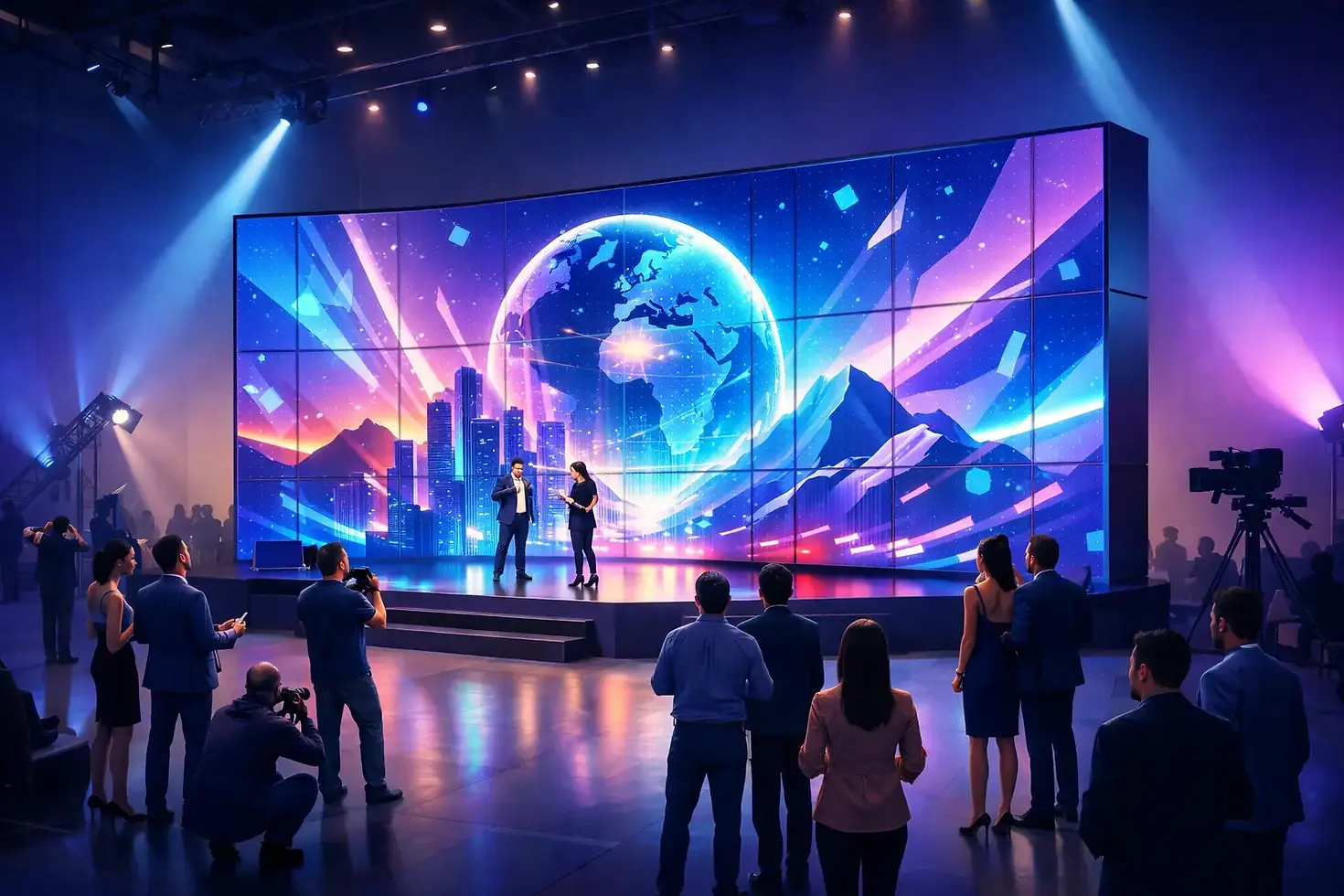
A Holowall display is a scalable holographic LED visual system that creates the appearance of floating motion graphics, video, products, logos, and 3D content. Rather than asking guests to watch a standard flat screen, it gives imagery depth, movement, and a striking suspended effect that naturally pulls attention from across a room.
The wall can be sized for the environment, from a focused entrance feature to a large-format activation built for a busy trade show floor or concert venue. Content can loop throughout an event, support audio-enabled video presentations, or become part of a scheduled reveal.
That flexibility is a major advantage. The same display format can introduce a newlywed couple at a reception, build anticipation before a keynote, show off a product in 3D, or turn a retail window into an after-dark attraction.
Holowall Display Review: Where It Stands Out
The best technology at an event has a job to do. A Holowall is strongest when that job is attracting attention quickly and giving people a reason to look twice, record a video, and share what they saw.
It creates a true arrival moment
Guests form an opinion about an event fast. A holographic wall at an entrance, registration area, or main focal point immediately signals that they are walking into something designed with intention. Animated names, event branding, countdowns, and custom visual sequences can set the tone before a guest reaches the main room.
For weddings and milestone parties, that could mean a larger-than-life monogram, portraits, or a cinematic introduction. For a corporate event, it could be a branded welcome sequence that feels more premium than a banner stand and more dynamic than a projected slide.
It makes product storytelling more visual
A physical product is not always easy to display. It may be too large, still in development, too valuable to leave unattended, or difficult to demonstrate in a crowded setting. A Holowall gives marketing teams another way to show its shape, features, and personality through motion.
A sneaker can appear to rotate in midair. A vehicle can be revealed in a dramatic sequence. A new beverage flavor can burst into color around a logo. The value is not simply that the display is different. It is that complex product information can become a short visual moment people actually want to watch.
It earns social attention without forcing it
People share experiences that look unexpected on camera. Holographic content creates depth and movement that stand out in phone footage, especially when the surrounding space is well lit and thoughtfully staged. That makes the display useful for organic guest content, creator collaborations, and on-site campaign coverage.
Still, social shareability is not automatic. Content needs a clear focal point, readable branding, and enough time for a guest to capture the full moment. A logo that flashes for half a second or a video overloaded with tiny text will lose its impact, no matter how impressive the display itself is.
The Trade-Offs to Consider Before Booking
A Holowall is not a replacement for every screen or every type of event décor. It is a high-impact visual tool, and it performs best when the event design gives it room to perform.
First, content quality matters. Generic video can play on a Holowall, but custom-built 3D animation and graphics tend to make the format feel intentional. The display is highly visual, so a polished visual concept matters more than a long message. Brands should focus on one central idea: a product launch, a campaign visual, a name reveal, or a signature event theme.
Second, location matters. The wall needs a position where guests can see it without traffic constantly blocking the view. A congested hallway, overly bright competing signage, or a placement behind tables can reduce the effect. For a product activation, place it where it can draw people into the experience. For a private celebration, give it a clean sightline near the entry, dance floor, or focal stage area.
Third, a Holowall should be planned as part of the event environment, not treated as an extra item added at the last minute. Power access, setup timing, content delivery, venue restrictions, and viewing distance all shape the final result. Experienced production support makes the process far easier, particularly for teams that do not work with holographic technology every day.
When a Holowall Is Worth the Investment
The return is strongest when visibility, memorability, and guest engagement matter more than simply filling space. For a major brand launch, corporate gala, conference booth, concert, or immersive retail promotion, the display can help transform a campaign message into an attraction.
It also makes sense for personal events where the hosts want one dramatic feature instead of several smaller decorative upgrades. A birthday party, wedding, or anniversary celebration may only need one standout installation to create the photos and videos guests remember afterward.
It may be less practical for a small daytime gathering with limited space, a program built around detailed presentations, or an event where the audience will be seated far from the display. In those cases, a conventional LED screen may be better for reading dense information and supporting long-form content. The choice depends on the outcome you want: information delivery, visual spectacle, or a mix of both.
How to Get Better Results From the Display
Start by defining the one reaction you want from guests. Surprise, excitement, curiosity, celebration, and product interest all lead to different creative choices. A wall designed for a wedding reveal should not look like a trade show product demo, and a retail campaign should not feel like a generic party visual.
Keep the content bold. Strong contrast, recognizable shapes, clear logo placement, and brief animated loops generally work better than crowded sequences. If text is necessary, use fewer words and larger type. Guests should understand the core message at a glance, even while walking past.
Think about the surrounding environment as well. Lighting, music, nearby décor, and the placement of staff or brand ambassadors can amplify the effect. A great holographic wall can invite people over, but a well-designed activation gives them something to do once they arrive.
For clients who need help shaping the creative, providers such as VX Holo can pair the display with custom graphic design and 3D animation support. That matters because the hardware gets attention, but the content gives that attention a purpose.
Rental, Purchase, or Leasing?
Rental is usually the practical route for one-time events. It lets planners bring in a premium visual feature without taking on storage, maintenance, or long-term equipment ownership. It is especially useful for weddings, conferences, concerts, seasonal campaigns, and milestone celebrations.
Purchase or leasing can make more sense for brands, venues, retailers, and entertainment operators that need recurring visual impact. A permanent installation can support rotating campaigns, regular promotions, and repeat event programming. The deciding factor is frequency: if the display will be used only once, rent it. If it will be a consistent part of how customers experience the space, ownership or leasing deserves consideration.
A Holowall works best when it is treated as more than a screen. Give it a clear purpose, great creative, and a place where guests cannot miss it, and it becomes the moment people are still talking about after the room clears.


Comments